AT&T
- 4.5
- Rating
- 100.00M
- Installs
- Free
- Price

 Analysis by App-foxy
Managing a mobile account is rarely something I look forward to, but the myAT&T app makes the routine parts of AT&T service easier to handle from one place. I tested it as a productivity app rather than treating it like a simple shortcut to a web page, and my impression is fairly practical: it is most useful when you already have AT&T service and want to check, pay, or review account details without opening a browser. It is free, aimed at Everyone, and developed by AT&T Services, Inc.
The app is not exciting, and that is fine. Its value comes from reducing small bits of account administration: checking what is due, reviewing a wireless or home-service account, and dealing with common tasks while away from a computer. I would recommend it to an AT&T customer who wants a central place for those jobs, but I would not install it expecting a complete replacement for every support interaction or a powerful budgeting tool.
How myAT&T feels in its current form
The current release is version 2026.2.1, and the long history of the application matters. It has been available since April 28, 2010, so this is not a new experiment trying to turn account management into a trendy mobile experience. It is an established utility that has evolved around a straightforward purpose: give customers access to their AT&T accounts through a phone or tablet.
In-Depth Coverage of AT&T
That maturity is visible in the basic workflow. I can open the app with a specific task in mind instead of first searching through a general AT&T website. The central account view is the important part because it gives context to the actions that follow. Before making a payment or checking a service detail, I can see which account I am dealing with, which is especially helpful for households with more than one AT&T service.
In everyday use, the app makes the most sense as a control panel. I would open it while commuting, during a lunch break, or after receiving a billing reminder. A customer who normally forgets where to find account information can benefit from having the same destination on the home screen. The experience is less about exploring and more about completing a job with as little friction as possible.
Its scale also suggests that this is a mainstream tool rather than a niche companion. The app has passed 100 million installs, while its average rating sits at 3.2 from roughly 363 thousand ratings. I read that combination as a useful warning: many people rely on it, but popularity should not be confused with universal satisfaction. Account apps are judged harshly because a login problem, delayed information, or unclear charge affects something important.
What I would use it for first
My first recommendation is to use myAT&T for repeatable account chores, not as the only way to solve unusual problems. Checking a bill, reviewing the status of a service, or making a regular payment are the kinds of tasks where a dedicated account app has a clear advantage over a browser bookmark. The mobile format is convenient when I need a quick look and do not want to remember a web address or navigate a large public site.
A realistic example is a family account with several lines. Before paying, I can use the app to confirm that I am looking at the correct AT&T profile and review the account information available there. If a charge looks unfamiliar, the app is a sensible first stop for understanding the bill and identifying which service or line deserves closer attention. It does not remove the need for judgment, but it puts the relevant account context closer at hand.
I also find it useful when account administration is shared. One person may handle the monthly payment while another needs to check service information. In that situation, the app can become a consistent place to begin, provided each person uses the appropriate account access and understands what they are authorized to view or change. That distinction matters: convenience should not encourage casual sharing of login details.
Another practical use is checking information before contacting support. I prefer to review the account myself first, because a current bill or service detail can help me describe the issue clearly. That can make a later conversation more focused. The app is therefore valuable even when it does not solve the whole problem directly; it can help me arrive at support with better information.
Where the recent version fits into the product’s evolution
The current version number, 2026.2.1, shows that the product is still being maintained as an active account tool. I would treat that as evidence of ongoing product development, not as a promise that every part of the experience has been redesigned. A version update can improve stability, adjust account flows, or refine compatibility without changing the basic character of the app.
That is important for existing users. People who have used myAT&T for years should expect continuity in its main purpose: managing AT&T accounts from a mobile device. The benefit of an established app is that the underlying idea is familiar. The trade-off is that long-lived account software can accumulate layers of navigation and legacy expectations, making it feel more functional than elegant.
I would update it through the normal app-store process rather than holding back automatically, especially if I depend on it for billing or account access. At the same time, I would not assume that a new version will fix every personal frustration. If the issue is an incorrect account detail, a service restriction, or a problem requiring human review, an update may not change the outcome. The release is a reason to keep the app current, not a substitute for understanding the nature of the problem.
You May Also Like

 8 Ball Pool
 Is Built on Rivalries, Rematches, and Routine
A close look at the rivalries, rematches, shared routines, and unanswered safety questions that turn a quick pool match into a persistent mobile community.

 Samsung Music
’s Quiet Strength Is Playing What You Already Own
Its reach comes less from spectacle than from dependable access to a personal library. That simplicity is both the app’s strongest retention engine and its ceiling.

 AccuWeather: Weather Radar
AccuWeather Review: A Quick, Clear Forecast for Everyday Decisions
For everyday plans, the best forecast is the one you can understand quickly. AccuWeather makes rain timing, radar, and local conditions easy to act on, with a few trade-offs.

 Hill Climb Racing
Why Hill Climb Racing Still Turns Crashes Into One More Run
A tiny car, a bumpy hill and one more upgrade: Hill Climb Racing keeps resurfacing because its simple chaos makes every near-miss feel personal.

 AliExpress - Shopping App
AliExpress Makes Global Shopping Feel Personal, but Shoppers Bear the Risk
AliExpress turns a global marketplace into a pocket-sized discovery engine. Its reach is useful, its shopping loop compelling, and its trade-offs easy to miss.

 Lords Mobile: Kingdom Wars
Lords Mobile Is a Kingdom-Building Routine, Not a Quick Match
A case-by-case verdict on the building, battles, device demands, and social commitments that make Lords Mobile rewarding for some players and exhausting for others.
More From Our News Desk
View All News


For someone installing it today, the minimum operating-system requirement is Android or iOS version 9. That keeps the app available to many older devices, although the practical experience can still vary with the phone, operating system condition, and account setup. I would check compatibility before planning to use an older handset as a permanent account-management device.
The strongest workflow: prepare, check, then act
The best way I found to use the app is to separate viewing from action. I first open the relevant account area, confirm the service or profile, and read the information shown before tapping a payment or account-change control. This sounds obvious, but it prevents the most avoidable mistake in a multi-service household: acting on the wrong account because the app opened where I last left it.
I also recommend taking a moment to compare the app’s account information with the notification or bill that prompted the visit. The app is useful as a current reference, but I would not rush through a payment simply because a reminder appeared. Reviewing the line items or service context first gives me a chance to notice a change that deserves explanation.
A less obvious benefit is continuity. When I use the same mobile destination for regular checks, I build a simple habit: open the app, verify the account, inspect the amount or status, and only then complete the task. That routine is more valuable than any single button because it reduces careless actions. It also makes it easier to notice patterns in account activity over time, even though the app is not a dedicated personal-finance application.
For travel or a busy day, I would check important account information before leaving reliable internet access. I would not depend on a last-minute login when I am already dealing with a service concern. This is not a criticism unique to myAT&T; account apps are most helpful when access and authentication go smoothly. The practical lesson is to treat the app as a convenience for preparation, not as an emergency guarantee.
What existing customers may notice
Long-term users may appreciate that myAT&T keeps account management in a familiar mobile setting instead of forcing every task into a desktop browser. The app’s role is clear, and its large audience means it has become part of the normal AT&T customer journey. If I already know where my account information appears, returning to it is generally more efficient than starting from a search engine.
However, familiarity can work both ways. A returning customer may expect a particular menu or account path, while an updated release may present that information differently. I would avoid assuming that a remembered tap sequence will always remain identical. The safer habit is to read the labels and check the account context rather than tapping quickly from memory.
New users should also understand that installing the app does not automatically make every account-management situation simple. The account itself remains the source of truth, and access depends on using the correct credentials and profile. If a household has several AT&T relationships, setting up a clear mental map of which login corresponds to which service is more important than learning the interface.
The free price is a strong reason to try it if I am already an AT&T customer. There is no separate purchase decision standing between me and the basic convenience of a dedicated account app. Still, free does not mean frictionless. The real value depends on whether the app presents my specific account clearly and whether the tasks I need are available in a form I can complete without extra help.
Where the experience still has limits
My biggest reservation is that an account-management app can feel narrow outside its intended routine. If I want detailed financial analysis, long-term spending comparisons, or a neutral view across several providers, myAT&T is not the right tool. A banking app, spreadsheet, or independent budgeting service is better for that kind of work because those tools are designed to compare and organize money rather than manage one carrier relationship.
I would also skip it if I do not have AT&T service. The app’s usefulness comes from access to AT&T account information, so it has little reason to occupy space on the phone of someone using another provider. Even an AT&T customer who rarely changes plans or checks bills may prefer the mobile website if installing another app feels unnecessary.
Support is another boundary. The app can help me inspect account information before I ask for assistance, but I would not assume that every complicated billing dispute, technical fault, or account-security concern can be settled entirely inside it. When the problem needs investigation or a decision by AT&T, the app may be the starting point rather than the finish line.
There is also a trade-off between centralization and complexity. Bringing multiple account tasks together is convenient, but a larger account area can require more attention than a single-purpose payment screen. I prefer the broader view when I need context; for a very quick payment, I still slow down and verify the details because speed is not worth an avoidable mistake.
The rating of 3.2, alongside about 153 thousand written reviews, reinforces my balanced view. A large number of reviews can reflect many different devices, account arrangements, and expectations. I would not dismiss the app because of the average, but I would also not interpret its wide adoption as proof that every login or billing flow will feel smooth. Account software deserves a trial on the specific device and account that I intend to use.
Who should choose it, and who should look elsewhere
I think myAT&T is a good fit for an AT&T customer who wants one mobile place to review and manage account details. It is especially sensible for people who handle household bills, customers who regularly move between wireless and home-service information, and anyone who prefers an app to a browser. The free availability lowers the barrier to testing whether it fits a personal routine.
I would be more cautious if I only need a one-time support answer, if I do not want another account app, or if my main goal is comparing providers. In those cases, the AT&T website may be enough, while a budgeting or note-taking tool may better serve the financial side. The right choice depends on whether the problem is “manage my AT&T relationship” or “understand all my household spending.” Those are different jobs.
Privacy-conscious users should approach it as they would any service-account application: install it only on a device they control, use a strong account password, and avoid treating a shared phone as a harmless place for permanent access. I am not suggesting that the app is unsuitable for families; I am saying that account convenience should be matched with sensible access habits.
For older devices, the operating-system requirement is reassuring, but I would still keep the phone updated as far as its hardware allows. If the app feels slow or behaves strangely, I would first check the device’s available storage, connection, and software condition before concluding that the account service itself is at fault. That simple troubleshooting step can save an unnecessary support request.
What I would watch in future updates
Because the app is still represented by a current 2026.2.1 release, I would watch future updates for improvements that make account context clearer rather than merely adding more destinations. The most valuable progress, in my view, would be smoother movement between services, clearer explanations around billing information, and a more obvious distinction between actions I can complete immediately and issues that need support.
I would also pay attention to how well the app serves existing customers after interface changes. A redesign is only successful if a returning user can still locate essential account information without relearning everything. For a productivity app, clarity matters more than visual novelty. I would rather see a modest, dependable flow than a dramatic layout that makes a monthly task harder.
Another area worth watching is the balance between quick actions and careful confirmation. The app should make regular tasks efficient while giving enough context to prevent mistakes on shared or multi-service accounts. That balance is difficult: too many confirmations slow down routine work, while too few can make an important payment or account change feel risky.
My final judgment is positive but specific. myAT&T is not a universal finance manager and it is not a replacement for every form of AT&T support. It is a practical productivity app for customers who want direct mobile access to their AT&T accounts. I would install it for regular account checks, use the review-before-action workflow, and keep the browser or support channel available for unusual problems. If that matches your needs, the convenience is real; if it does not, the app is unlikely to become useful simply because it is popular.
FAQs for AT&T
01What is the myAT&T app and what can I do with it?
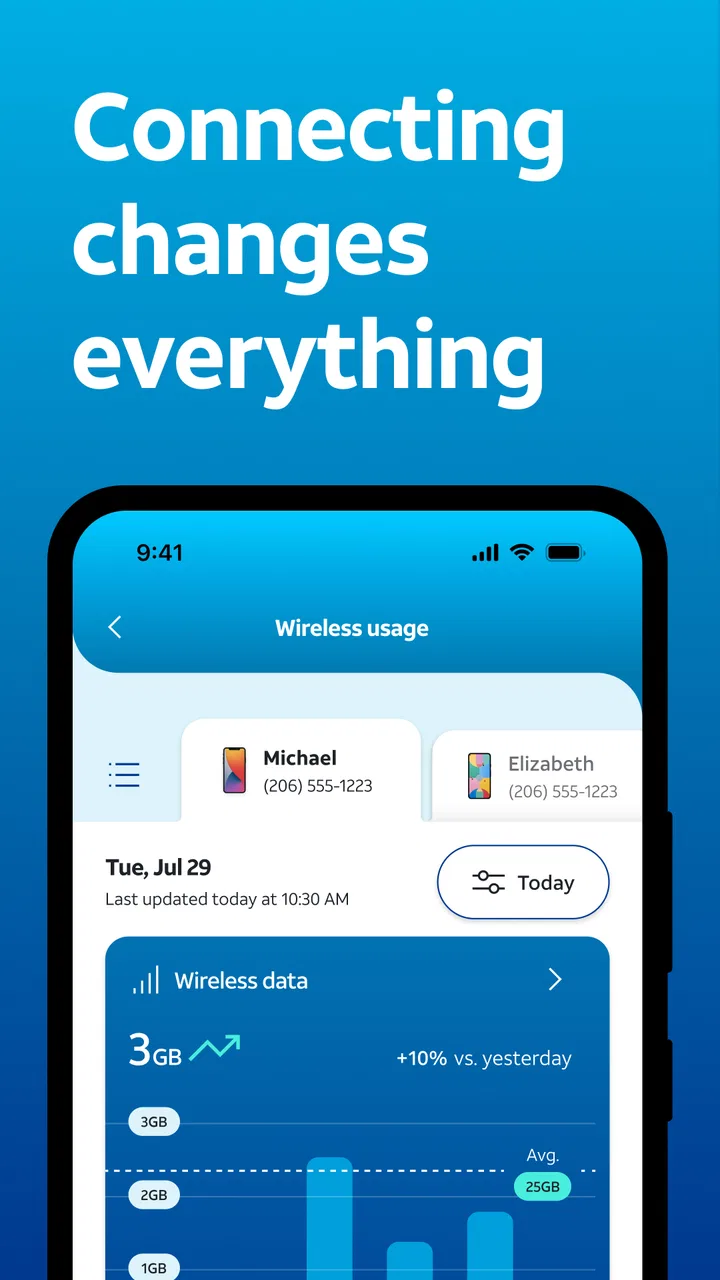
The myAT&T app is a mobile application designed for AT&T customers to manage their accounts conveniently from their smartphones. Users can pay bills, check data usage, manage plans, and troubleshoot issues. The app also provides access to customer support and allows users to update their personal information easily.
02Is the myAT&T app free to use?
Yes, the myAT&T app is free to download and use for AT&T customers. However, data charges may apply when downloading or using the app over a mobile network. It is advisable to use a Wi-Fi connection to avoid any potential data usage fees when accessing the app’s features.
03Can I manage multiple accounts with the myAT&T app?
Yes, the myAT&T app allows users to manage multiple AT&T accounts from a single app interface. This includes wireless, internet, and TV services. Users can switch between accounts easily, view details, and make payments for each account, providing a seamless management experience.
04What security features are included in the myAT&T app?
The myAT&T app includes robust security features to protect user data. It requires a secure login with a user ID and password. Additionally, users can enable biometric authentication, such as fingerprint or facial recognition, for added security. The app also supports two-factor authentication for extra protection.
05How do I troubleshoot issues within the myAT&T app?
The myAT&T app offers a built-in support section where users can find solutions to common problems. It provides troubleshooting guides and step-by-step instructions. If further assistance is needed, users can contact AT&T customer support directly through the app for personalized help with any issues they encounter.
Pros
- User-friendly interface for easy navigation.
- Quick access to billing and payments.
- Real-time data usage tracking.
- Seamless plan management options.
- 24/7 customer support chat feature.
Cons
- Occasional app crashes reported.
- Limited functionality without internet.
- Some features require account login.
- Notifications can be overwhelming.
- Does not support all account types.

AT&T
Gallery